Types of Masonry Arches & How Keystone Pointing Can Help Maintain Them
Across much of Sydney’s commercial and residential properties, you’ll see brick arch bars spanning over windows and doors, laneway entries, shopfronts, verandahs and heritage façades. These masonry arches do two things at once: they carry structural loads and define the building’s character. Knowing which types of masonry arches you’re looking at makes it far easier to keep them safe, watertight and true to their original design.
This guide aims to help strata managers, building owners and homeowners who want to quickly recognise common masonry arch types, understand where each is typically used, why maintenance matters and how Keystone Pointing can help keep them safe and sound.
What is a Brick Masonry Arch Bar?
A masonry arch is a curved arrangement of bricks or stones that spans an opening (typically over windows, doors and shopfronts) and transfers load into the masonry on either side instead of straight down like a beam. Because arches work mainly in compression, they’re extremely efficient at carrying heavy loads for their size.
On many Sydney buildings, especially from the mid-1900s onwards, the arch bar works as:
- Transfer the weight of the brickwork safely over the opening
- Limit sagging and cracking in the brickwork above
- Provide a straight, stable fixing line for the brick courses
- Work in combination with lintels, wall ties and surrounding masonry to keep the façade stable
Over time, arch bars can deteriorate. As the bar expands, it can crack surrounding bricks and joints, bow the arch, or, in severe cases, destabilise the wall. That’s why understanding what’s going on above your windows and doors is so important when you’re planning inspections, repairs or façade upgrades.
How Arches Are Classified
Before looking at the various types of masonry arches, it helps to understand how to group them. Traditionally, arches are classified in three main ways.
By Shape
Arches can be flat, gently curved, semicircular, pointed, elliptical, horseshoe-shaped, triangular and more. Each profile creates a different visual look and a different way of pushing loads into the supporting walls.
By Material
The arch itself can be made from brick, stone, concrete or even steel. In Sydney residential and commercial façades, brick arches are by far the most common. Stone arches appear on some early civic buildings, while concrete and steel arches are more typical in modern structures or as hidden supports behind decorative brickwork.
By Number of Centres
Many arch shapes are based on one or more circles, called “centres”. A one-centred arch might be a simple semicircle, two-centred arches include many pointed/Gothic profiles, three- and four-centred arches include more complex elliptical and Venetian forms. The number of centres affects how the arch is set out on site and how its loads spread back into the abutments.
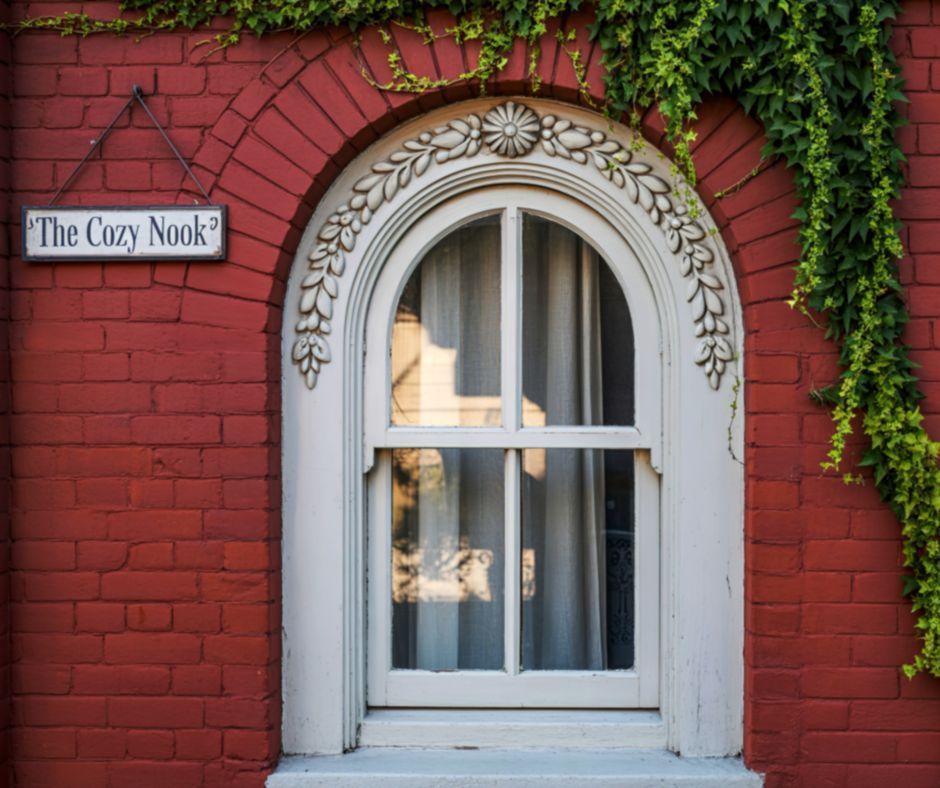
Common Masonry Arch Types of Brickwork in Sydney
Sydney’s façades use a surprisingly wide range of brick arch forms. Here are the most common arch types you’re likely to find in residential and commercial frontages.
Flat
A flat arch looks almost like a straight lintel, there’s little to no visible rise. You’ll see it above tall sash windows in terraces, or across long shopfront openings.
Segmental
Segmental arches have a shallow circular curve, less than a half-circle. They’re common over garage openings, verandahs and shopfronts. The shallow curve makes segmental arches efficient for longer spans while still tolerating small movements in the building.
Semicircular
A semicircular arch forms a true half circle. You’ll typically find these over church doors, institutional buildings and some grand Federation entries and verandahs. They have a visually heavier, more formal appearance. Structurally, semicircular arches are very stable, distributing loads evenly into the supports. However, when mortar deteriorates or bricks spall, the arch can flatten slightly, causing fine cracking at the crown or movement in the supporting piers.
Elliptical
Elliptical arches have a stretched, oval-like curve that feels softer than a simple segmental or semicircle. They’re popular in modern renovations where designers want a wider opening with a refined, elegant profile, for example, between a living room and courtyard in a terrace extension.
They demand precise setting-out and consistent brickwork to keep the curve true. Poorly executed or poorly supported elliptical arches can develop uneven joints and hairline cracks that collect water.
Pointed/Gothic
Pointed or Gothic arches rise to a sharp apex, drawing the eye upward and emphasising height. You’ll see them in older churches, institutional buildings and some late-Victorian terraces with elaborate façades.
Because the load is directed more vertically, pointed arches can span higher openings without massive walls. When things go wrong, you might notice cracking radiating from the apex or separation between the arch and adjacent walls if movement hasn’t been accommodated.
Horseshoe
Horseshoe arches extend beyond a half circle, curling back inwards. They’re less common in Sydney but occasionally appear in decorative or stylistically eclectic façades, or in custom garden and courtyard openings.
The extra curve creates a dramatic visual impact but also increases horizontal thrust at the springing points. This makes proper support and tie-in to the surrounding brickwork very important.
Venetian/Queen Anne
Venetian or Queen Anne arches combine a flat central section with small semicircular curves over tall side windows or panels. They add vertical emphasis and decorative interest but rely on accurate brickwork and sound supports.
Bullseye/Oculus
A bullseye or oculus is essentially a circular brick opening, often used as a small window or ventilation feature high in a gable or stairwell wall. They add character to both heritage and contemporary designs.
Because they sit fully exposed on the façade, waterproofing is important. Failed sealants, flashing or mortar can let water travel around the circle and into the wall cavity, leading to damp patches inside.
Triangular
Triangular arches are formed by two straight lines meeting at a central peak. They’re visually striking and less common than other forms, sometimes used as a feature over side entries or small windows.
The geometry means loads concentrate along the two straight sides, so the load paths into the supporting brickwork must be properly understood and detailed. Any failure in the bearing points can quickly show up as cracking just beneath the “points” of the triangle.
Why Knowing the Kinds of Brick Masonry Arch Is Necessary
Once you can recognise which of the kinds of brick masonry arch you’re dealing with, it becomes much easier to manage inspections, budgets and risk.
Faster, more accurate inspections
Being able to tell a flat jack arch from a segmental or semicircular arch means you know where to look first for trouble. This speeds up condition audits across large properties.
Better maintenance decisions
Different arch profiles push loads into the wall in different ways. Understanding the form helps you decide whether localised repointing, additional wall ties or partial rebuild is the safest option.
Arch-bar risk awareness
Recognising tell-tale signs, such as bulging brickwork or fine cracks above openings, helps you pick up hidden deterioration before it becomes a safety issue.
Cost forecasting & budgeting
Some arches require more intricate scaffolding, skilled bricklayers and careful detailing than simple flat spans. Knowing which arch you’re working with allows more realistic allowances in annual maintenance plans.
Prioritising works across a portfolio
When you map arch types against their condition, you can quickly triage which entries, shopfronts or courtyard openings to address first. Shallow segmental arches with active cracking, for example, may move up the list ahead of sound semicircular arches.
Heritage compliance & value retention
Councils and heritage advisers expect like-for-like repairs. Being able to describe and match the original arch form is vital when you’re seeking approvals or engaging consultants on heritage buildings.
Contractor scoping & quotes
Clear drawings and descriptions of arch forms lead to tighter scopes, fewer variations and more comparable quotes. Instead of “fix cracks over windows”, you can ask for “rebuild and repoint segmental brick arch over window opening.”
Safety and liability management
Certain profiles create higher horizontal thrusts at supports. Understanding that helps owners, strata managers and facility teams weigh up safety risks and document maintenance decisions if issues ever arise.
Why Upkeep Counts Across Types of Masonry Arches
Whether your building has a simple jack arch or a highly decorative bullseye, regular maintenance across all masonry arch types is important and here’s why.
Safety & Structural Integrity
Neglected arches can slowly crack, deflect or shed bricks. Falling masonry is a hazard for residents and pedestrians. Proactive repairs reduce the risk of emergency make-safe work.
Preventing Water Ingress
Open mortar joints, rusted arch bars and fine cracks around arches are classic water entry points. Once moisture gets into the wall, it can rust steel, damage plaster linings, stain paintwork and contribute to mould and damp complaints.
Extending Service Life
Localised repointing and arch bar replacement can add decades of life to original masonry. Small jobs done early are far cheaper and far less disruptive than full façade rebuilds once damage has spread.
Protecting Adjacent Elements
Movement at the arch doesn’t stay put. It can show up as distorted window frames, jammed doors, cracked render, leaking flashings or damaged sills. Maintaining the arch protects everything that’s built into or around the opening.
Heritage and Visual Appeal
Sydney’s heritage homes and shopfronts rely on crisp brick joints and true curves for their character. Tired, patchy arches drag down the whole façade. Sensitive repairs, matched mortar and careful cleaning restore the original intent of the design.
Compliance & Insurance Confidence
Regular inspection records and timely repairs to arch bars and lintels support building compliance and can reduce disputes with insurers after major weather events. They demonstrate that owners and managers have taken reasonable steps to maintain the structure.
How Keystone Pointing Experts Help Maintain Different Brick Masonry Arch Bars
Comprehensive Assessment of the Overall Brick Structure
Keystone Pointing doesn’t just look at the obvious crack. Our team assesses how the arch, arch bar, lintel, wall ties and surrounding brickwork are working together. This includes inspecting from ground level, elevated work platforms or scaffolds to understand the full load path and moisture exposure before recommending repairs.
Arch Bar & Lintel Replacement
Keystone Pointing can remove damaged arch bars and lintels and replace them with sturdy and stable units designed for coastal and urban Sydney conditions. The team carefully sequences the work to keep the brickwork safely supported, installs new bars or lintels with appropriate bearings and flashing, then rebuilds the brickwork to match the existing façade.
Brick Repointing & Tuckpointing
Once structural issues are addressed, deteriorated mortar joints are raked out and repointed with compatible material to suit the original brickwork. For many heritage streetscapes, tuckpointing can reinstate the sharp joint definition that defines the look. Matching colour, texture and joint profiles is critical for both aesthetics and performance, and it’s an area where Keystone Pointing’s decades of experience really show.
Routine Maintenance
For owners and managers looking to avoid surprises, Keystone Pointing can help plan your brick maintenance, from periodic inspections of known problem arches to small, scheduled repointing and brick replacement works. This approach is particularly valuable for strata schemes and commercial portfolios where budget predictability and façade safety are at the forefront.
Wrap-Up: Which Arch Do You Have?
Masonry arches are both practical and beautiful. Understanding which forms you have (segmental, semicircular, flat, pointed, decorative or a mix) gives you a clearer picture of how your façade works and what it needs to stay safe.
What doesn’t change is the need for proper upkeep. Crumbling arch bars, cracked mortar and distorted arches are not “cosmetic only” issues. Over time, they can compromise structural performance and create real safety risks.
If you’re not sure what kind of arch you’re dealing with, that’s completely fine. Keystone Pointing can assess the brickwork, identify the arch type and condition, then recommend a tailored solution that may include brick repointing, tuckpointing, arch bar and lintel replacement or careful heritage restoration.
If you’d like clarity on what’s happening around your masonry arches, simply
get in touch to discuss your building and options.
Key Takeaways
- Arches are classified by shape, material and number of centres. Each combination creates distinct aesthetics, load paths and movement behaviour in the surrounding brickwork.
- On Sydney façades, the most common brick arch forms are flat/jack, segmental, semicircular, elliptical and pointed, with occasional bullseye, horseshoe, triangular and Venetian variations.
- Arch bars and lintels often deteriorate from moisture and corrosion over time. Early repointing, correct flashing and timely replacement dramatically extend their life and reduce safety risks.
- Masonry arches carry load primarily in compression and transfer weight along their curved geometry into the supports, so different profiles produce different patterns of structural thrust and potential cracking.
- Typical maintenance issues involve mortar breakdown, water ingress around joints and flashings and weakened abutments where the arch bears on the wall.
- Property owners and managers should treat arch inspections as a routine part of façade maintenance, particularly on older buildings and busy shopfronts.
- Engaging a specialist like Keystone Pointing early helps preserve the integrity, appearance and value of arches while keeping buildings safe and compliant.
Frequently Asked Questions
What’s the difference between a segmental arch and a semi-circular arch?
A segmental arch is formed from a small part of a circle, so it has a shallow curve and sits “flatter” over the opening. It’s common over windows and shopfronts where you want a wide span without a tall rise. A semicircular arch is a true half circle, so it appears taller and heavier but offers excellent stability and even load distribution. Both are common masonry arch types in Sydney, but their behaviour and maintenance needs differ.
What are common signs that an arch may need repair or repointing?
Warning signs include cracking in the bricks or mortar above or along the arch, bricks that have shifted out of line, sagging along the underside of a flat arch or gaps opening between the arch and the frame below. Inside, you might notice sticking windows or doors under affected arches. Any of these signs warrants a professional inspection.
Can repointing alone fix minor arch cracks?
In some cases, yes. If the structure behind the arch is sound and cracks are limited to weathered or shrinking mortar, careful repointing with the right mix can restore both strength and appearance. However, if cracks are caused by failed supports, repointing alone will only hide the symptoms for a short time. A specialist will confirm whether underlying structural repairs are needed first.
How often should I inspect a masonry arch or arch bar in a commercial building?
For busy commercial properties or strata buildings, it’s sensible to visually check brick arches and arch bars at least annually, and after major storms. A more detailed professional inspection every few years or more often for older or coastal properties helps pick up early corrosion and movement before it becomes urgent. Your maintenance program can then be tailored to the age, exposure and risk profile of the site.
Can I repoint an arch myself or do I need a specialist?
DIY repointing is risky on arches. The joints are often narrow, curved and structurally important. Removing too much mortar at once or using the wrong mix can weaken the arch or trap moisture. On heritage façades, inappropriate mortars or tooling can also damage the appearance and reduce future resale value. Engaging a specialist contractor is the safer choice.
How much does an arch bar replacement cost?
Costs vary widely depending on various factors, including access, the number and length of openings, the type of arch, scaffold requirements and how much surrounding brickwork needs rebuilding. What’s consistent is that early intervention is almost always cheaper than waiting until cracks spread or bricks begin to fall. Keystone Pointing typically recommends an on-site inspection and written scope so you can compare options and stage works if needed.
Do wall ties affect arch performance and cracking patterns?
Yes. Wall ties help connect the outer brick skin back to the inner structure. If they rust away, the façade can bow or move independently, changing how loads from the arch are carried. This can show up as unusual cracking patterns around arches or as bulging brickwork. Arch repairs and wall tie replacement are carried out together to stabilise the entire wall.
What happens if I ignore warning signs around a masonry arch?
Minor cracks and rust stains rarely fix themselves. Over time, water finds its way in. What starts as a cosmetic concern can become a structural issue, with loose bricks, falling fragments or the need for emergency propping and extensive rebuilding. Ignoring obvious warning signs can also expose owners and managers to safety and liability risks if something fails.
How does weather (rain, humidity, salt air) affect masonry arches?
Sydney’s climate is tough on masonry. Wind-driven rain and high humidity feed moisture into hairline cracks, while coastal salt air accelerates corrosion of unprotected steel arch bars and lintels. Repeated wet-dry cycles can also break down older mortars. Good detailing (including sound flashing, appropriate mortar, quality repointing and timely arch bar replacement) helps arches stand up to local conditions for decades.
More Posts Like This: