Repointing Brick Steps in Sydney: A Practical Guide for Safer, Stronger Entrances
If the mortar between your bricks is cracking, crumbling or falling out, you are not just looking at a cosmetic issue. You may be dealing with a genuine safety and water ingress risk. Repointing brick steps means removing the deteriorated mortar from the joints and replacing it so the brickwork can do its job again.
Wet weather, humidity, garden watering, coastal air, and constant foot traffic all work on the same joints at once. Left too long, failing joints let moisture track into the structure, loosen bricks and create uneven edges people can trip on. That is not what you want at a family home, a strata entry or a commercial frontage.
Three questions come up every time: what the work actually involves, how to catch the problem early, and why one repair holds for decades while the next one fails inside two years. The answers do not change with the size of the property. Only the scope of the job does.
What Does It Take to Repoint Brick Steps Properly
A specialist rakes the failed mortar out of the joints to a consistent depth, cleans the joints out completely, then packs in fresh mortar matched to the original in both strength and colour before tooling the finish so it sheds water. The bricks themselves stay where they are. Only the mortar joints are renewed.
There is one qualifier that matters more on steps than anywhere else on a property. This only works if the bricks are sound and still properly bedded. If a tread has dropped or a brick rocks underfoot, part of the structure needs relaying before any pointing happens. Keystone Pointing brings over 14 years of masonry restoration experience across Australia and the UK, and our brick repointing work starts with working out which of those two jobs you actually have.
What Repointing Brick Steps Involve & Why It Matters
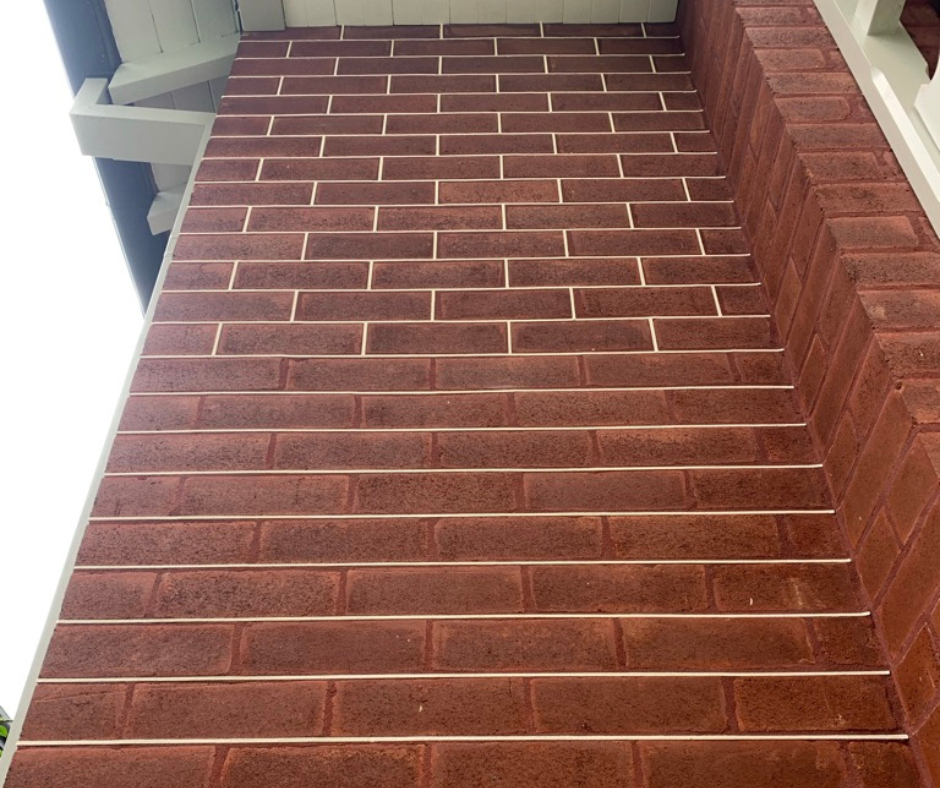
Repointing renews the mortar between bricks: raking out what has failed, packing in new mortar, and finishing the joint to match the existing profile and appearance. The same repointing principles apply on a wall, a chimney or a set of front steps, though the materials and methods shift with what the brickwork has to cope with.
Repointing vs Tuckpointing
Repointing is restorative and about performance. Tuckpointing is decorative, a finishing technique that creates the look of fine, crisp joints on heritage facades, and where the two differ matters most when your steps are part of a period frontage.
Why mortar does more work than you think
Mortar is not filler. On a set of steps it:
- Bonds the bricks together so loads are shared properly
- Closes off the pathways water would otherwise use to get in
- Absorbs small movements from temperature change, settlement and vibration, so the bricks do not crack or shift
When the mortar stops doing those three things, the bricks start taking the strain instead. That is the point where a small job turns into a large one.
Why Brick Steps Wear Out Faster Than Brick Walls
Almost every guide written on this subject treats a set of steps as a wall lying on its side. It is not. Steps carry three loads a wall never has to deal with, which is why the joints on an entrance give up years before the joints on the house behind it.
Foot Traffic
Every trip up and down abrades the joint surface and works the mortar loose. Front steps on a family home take thousands of passes a year, and the wear concentrates exactly on the joint edges and the nosings of the treads and risers, where the load lands hardest.
Water Sits Instead of Running Off
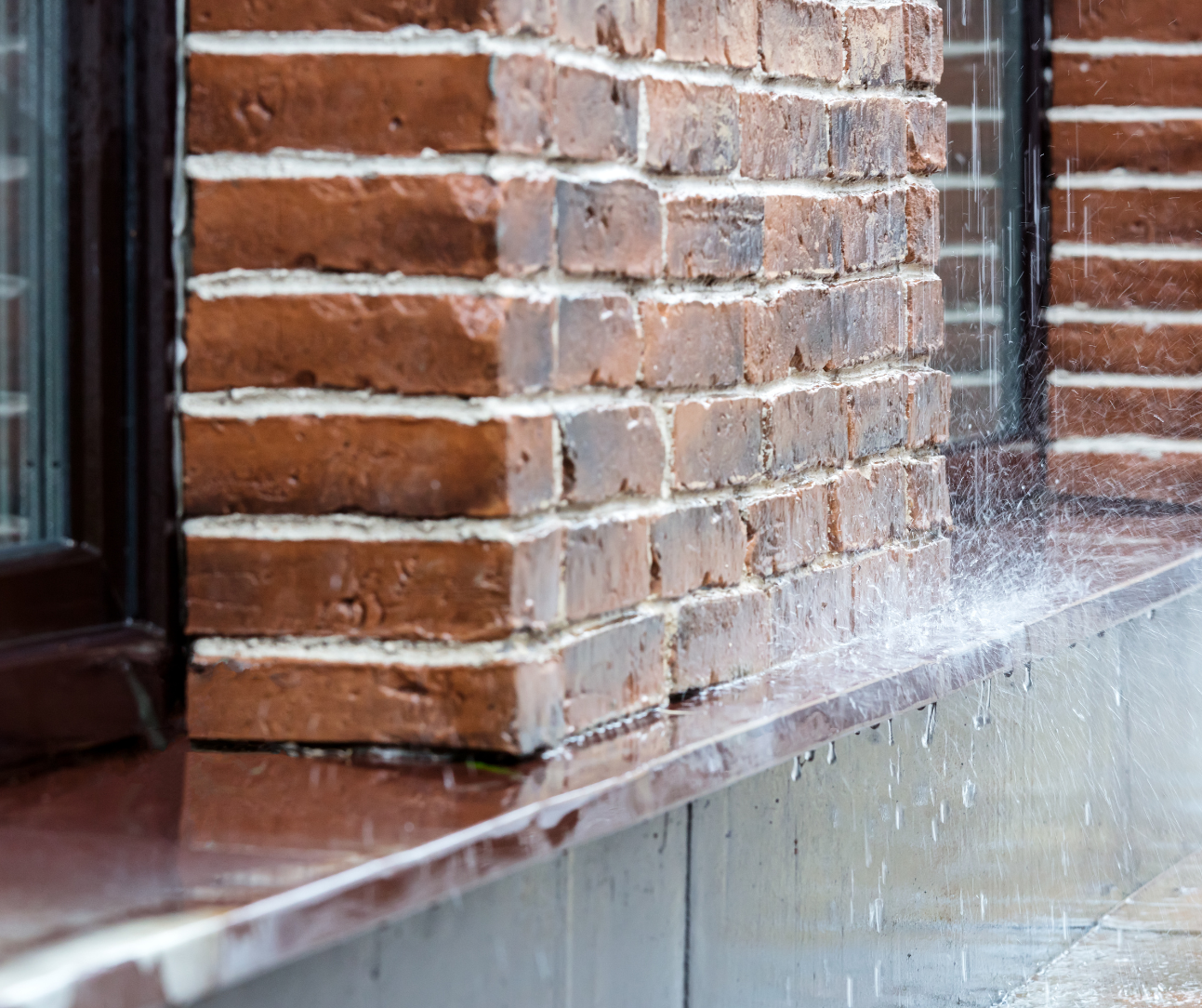
A vertical wall sheds rain within minutes. A tread holds it. Water sits in the joint until it evaporates or soaks in, and Sydney's pattern of heavy downpours followed by warm, humid drying puts the mortar through that wet and dry cycle over and over. When joints spend more time wet than dry, that is very often what triggers repointing brick stairs.
The Bottom Courses Sit in the Ground
The lowest bricks of a set of steps are in permanent contact with the ground, and ground moisture wicks upward through them, carrying dissolved salts with it. When that moisture reaches the surface and evaporates, the salts crystallise inside the joint and inside the brick face, breaking both apart from the inside. Coastal Sydney adds airborne salt on top of that, and on a coastal apartment building we restored in Manly, the same salt attack had hollowed out the joints and dropped bricks out of the wall entirely.
Salt attack is what most people are actually looking at when they put a white powdery bloom or a soft, receding joint down to age. The same process drives salt damp higher up a building, and once the binder breaks down, you get mortar fretting.
Key Warning Signs Your Brick Steps Need Repointing
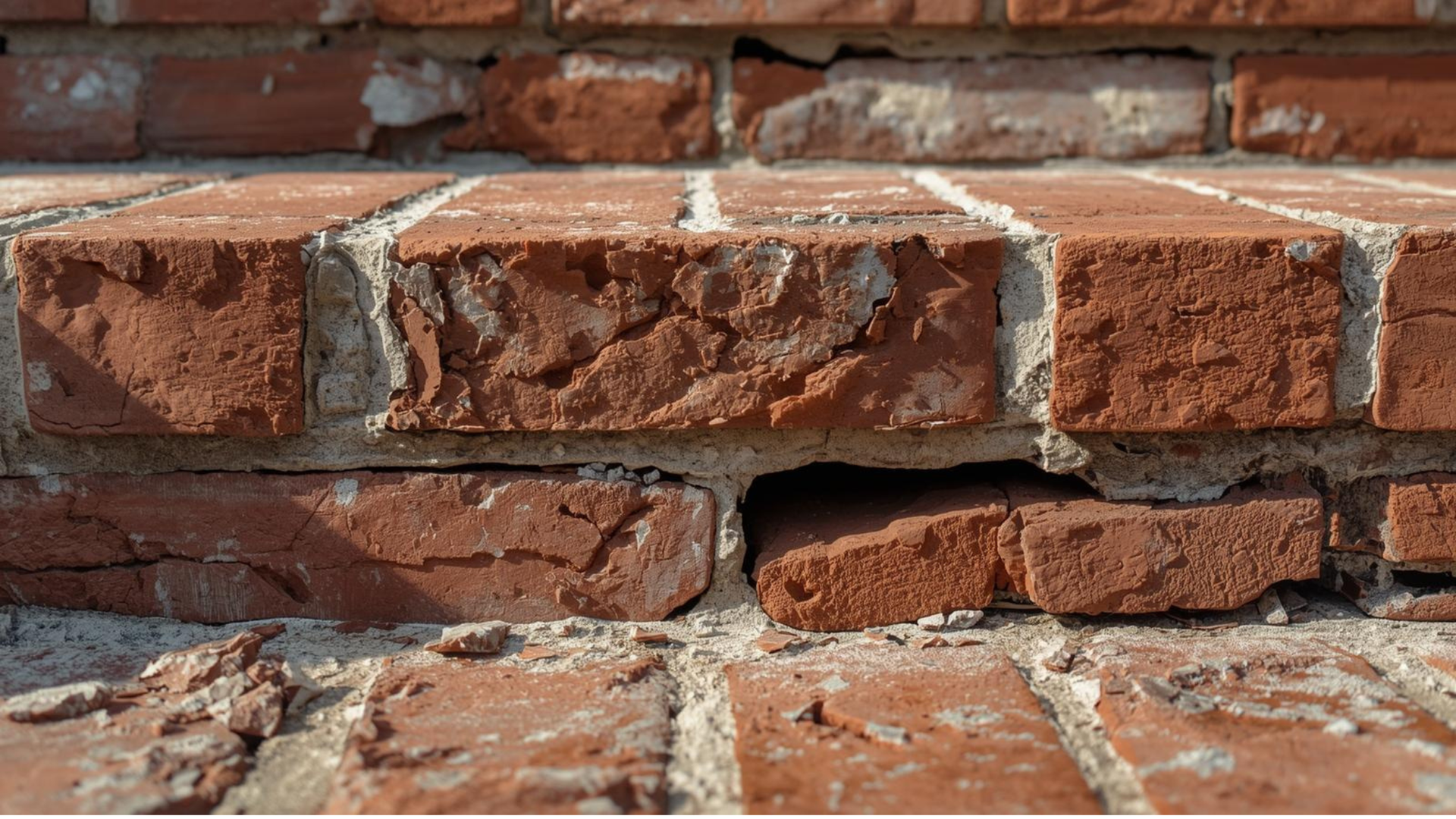
Have a proper look at your steps in daylight. The signs below are the ones worth acting on, and the same signs a building is due for repointing usually turn up on the walls a few years behind.
Crumbling mortar you can scratch out
Run a key or a flathead screwdriver lightly along the joint. If the mortar powders away or drops out in chunks, the binder has gone, and it is no longer holding the bricks to each other. This is fretting mortar, and once it starts, it does not stop on its own.
Gaps deep enough to hold water
Joints that sit noticeably below the brick face give water somewhere to pool. On a vertical wall, that recess drains. On a tread, it does not, so the joint refills every time it rains and the deterioration speeds up.
Sand collecting at the base after rain
A small pile of fine grit at the bottom of the steps after a downpour is the joints washing away in front of you. It is one of the earliest signs and one of the easiest to miss.
Loose bricks or unstable joints
If a brick moves under pressure, do not ignore it. Movement means the joint has failed outright or the base underneath is shifting, so a proper mortar repair starts with resetting that brick rather than pointing over the top of it.
Cracking through the joints
Cracks running through mortar joints, and sometimes into the bricks themselves, tell you the masonry is moving or under stress rather than simply weathering.
White powdery residue & persistent damp
The chalky white film on brick faces is the salt mechanism described above showing itself at the surface. Darker patches, algae, rust staining near metal, and damp marks that keep coming back all point the same way: water is getting in and not getting out. Shaded, south-facing entries and steps beside garden beds are the usual suspects.
Repointing or Rebuilding: Which Job Do You Actually Need?
This is the question most people want answered, and almost nobody addresses honestly. The decision to repoint brick steps rather than rebuild them comes down to what is happening below the joints. Repointing renews mortar. It cannot fix a step that has dropped, a tread that rocks under weight, or a structure where the bedding mortar has failed the whole way through. Knowing which one you are looking at changes the scope, the cost and the timeline.
| What you can see | What it usually means | The likely fix |
|---|---|---|
| Surface joints crumbling, bricks firm | Weathering and wear on the pointing only | Repointing |
| Joints lost deep into the wall, bricks still firm | Long-term neglect, water tracking in | Repointing, raked deeper, sometimes with brick repair |
| One or two bricks loose, the rest sound | Localised bedding failure | Reset those bricks, then repoint |
| A whole tread moving underfoot | Bedding mortar or base failure | Relay that section, then repoint |
| Steps pulling away from the house | Movement, settlement or drainage under the structure | Investigate the cause before any masonry work |
Working out which one applies to your steps is what a site visit is for. It is worth saying that we will tell you when the smaller job is the right one. Repointing a set of steps that actually needs relaying is money spent on a repair that will fail again in just a couple of years.
How Repointing Brick Stairs Is Done Properly
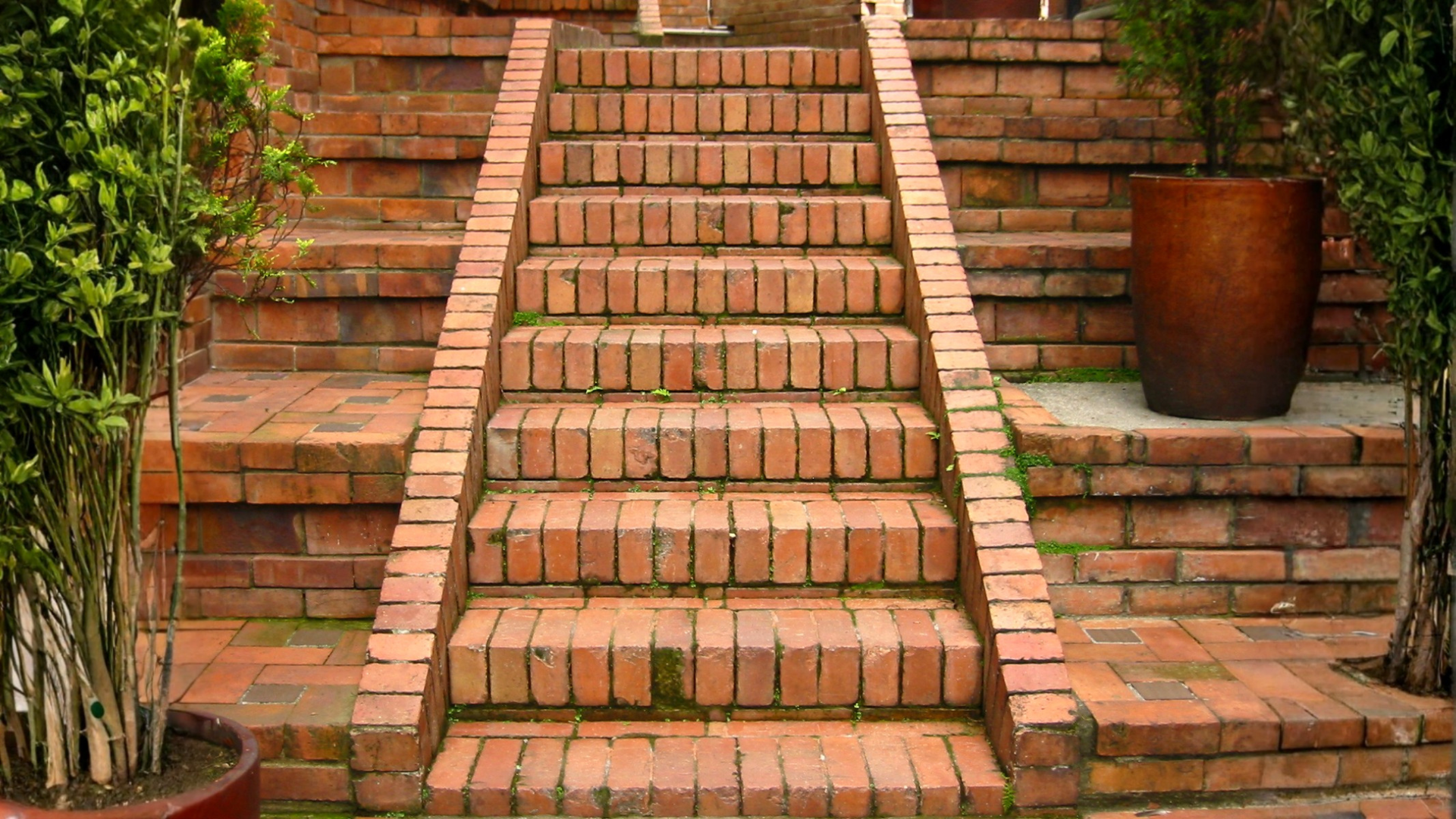
The whole job is preparation and control. Rushing is what produces damaged brick edges, hollow joints and mortar smears that never quite clean off. Here is what each stage involves and why it matters.
Assessment & Mortar Selection
Before anything is touched, we work out what the original mortar was made of, how strong it is, what sand it carries and what colour it needs to match. That governs everything else, and the mortar must always be softer than the brick it sits between.
Every bit of movement and salt pressure the joint used to absorb gets taken out on the brick faces instead, and a spalled brick has to be replaced rather than repaired. On heritage and Federation brickwork, that usually points to a lime mortar rather than a modern cement-heavy mix.
Preparing the Area
Loose debris comes off, the work zone is cleared, and nearby painted surfaces, render and garden edges get protected. Entry steps are awkward places to work, so stable footing is set up before any tools come out.
Raking out the Old Mortar
The failed mortar is cut out to a consistent depth so the new mortar has something to key into rather than sitting as a thin skim on the surface. Depth matters more on steps than on walls, because a shallow patch on a trafficked surface breaks up quickly. The work goes slowly near brick edges, since chipping a face is the fastest way to turn a small repair into a restoration. Horizontal joints are done before verticals, which keeps the work controlled, and every joint is vacuumed and brushed out before anything new goes near it.
This stage also generates respirable crystalline silica, which is treated as a serious workplace hazard by SafeWork NSW and is one of the reasons this is controlled work with dust extraction and water suppression rather than something to attempt with a hired grinder.
Mixing & Filling
Mortar is mixed in small batches so none of it starts setting before it goes in, at a consistency that holds its shape without slumping out of the joint. The joints get lightly misted first, because dry brick pulls water out of fresh mortar too fast and stops it curing properly. Then the mortar is packed in firmly, right to the back of the joint. Voids are what make a joint fail early, and on a tread they fill with water.
Tooling the Finish
Once the mortar is thumbprint-hard, the joint is tooled and worked consistently from the top step down to the bottom. On steps that is doing more than looking right, because a properly compacted, slicked joint sheds water instead of holding it. The profile is dictated by whichever of the common pointing finishes is already on the brickwork rather than by preference, and colour matching happens at the same stage, so a repaired section does not read as a patch against the rest of the entrance.
Curing
Mortar gains its strength over days, not hours, and Sydney weather can work against it in both directions. Warm, dry, windy conditions pull the moisture out before the mortar has cured, and heavy rain on green mortar washes the surface out of the joint. Traffic stays off, the work gets protected, and in hot weather it gets misted. If your steps are the only way into the house, ask about this before the job starts so access can be planned around it.
The Sealing Mistake to Avoid on Brick Steps
Sealing a horizontal brick surface sounds like protection and usually is not. A sealer stops the masonry from breathing, so any moisture that does get in has nowhere to go and stays there, working on the joint from the inside. It also leaves water sitting on the surface instead of soaking away, which turns a wet morning into a slip hazard on the one part of the property everyone has to walk on.
What actually does the job is duller and more effective. It comes down to a correctly matched mortar, properly compacted and tooled to a finish that sheds water, with drainage kept away from the base of the steps. Get those right, and the steps do not need a coating. If someone recommends a breathable system for a particular problem on your property, that is a different conversation, and it should arrive as a considered recommendation rather than a default.
Keeping Your Brick Steps Sound Between Repairs
A little maintenance goes a long way on an entrance that gets used every day. It is worth being realistic, though. Steps will always need attention sooner than the walls of the same property, because they are the only masonry on the place carrying people, holding water and sitting in the ground. Whatever interval applies to how often the rest of a brick house needs repointing, the steps will come due well inside it.
- Inspect the joints seasonally, and again after heavy rain
- Clear leaves, soil and mulch build-up that holds moisture against the bottom courses
- Deal with hairline cracking early, before water can open the joint up
- Check downpipes, irrigation overspray and water pooling near the landing
- Keep the pressure washer away from the joints, since it strips mortar faster than weather does
- If damp or white residue keeps returning, find the moisture source rather than patching the same spot repeatedly
What Determines the Scope of a Brick Step Repair
Two sets of steps that look similar from the footpath can be very different jobs. The cost of repointing brick steps depends less on how bad they look and more on what is underneath.
What Changes the Size of the Job
- How much of the joint network has failed. Isolated patches are a different job from a full run where every joint has gone.
- Surface loss or full depth loss. Deep joint loss means more raking, more mortar and more time.
- Whether the bricks are still bedded. Loose or rocking bricks add relaying work before pointing can start.
- Whether damp or movement is involved. If water or settlement caused the failure, the cause gets dealt with first, or the repair will not hold.
- Access. Narrow side entrances, high front steps and strata buildings needing scaffolding all change the scope.
When a Specialist Assessment is Necessary
- Bricks are loose, misaligned, or the cracking is widespread
- You suspect water ingress, movement or settlement at the base
- The building is strata-managed, and access or scaffolding needs planning
- The steps are heritage brickwork, where compatibility and finish matter
- You need licensed workmanship and insurance behind the work
What to Ask Your Contractor
- What mortar mix are you using, and why that one for these bricks?
- Will you colour match to the existing joints?
- How deep are you raking the joints out?
- What happens to the loose treads; are they being reset or just pointed over?
- How long before we can walk on them again?
- Are you licensed and insured for this work?
Repoint Your Brick Steps Before the Job Gets Bigger
Brick steps take more punishment than any other masonry on a Sydney property. They carry people, they hold water instead of shedding it, and they sit in the ground where salt can get at them. That is why the joints go first, and why they go long before anything else on the house looks tired.
If what you are seeing is crumbling mortar, gaps holding water, or a brick that moves when you stand on it, the honest answer is that it is worth having looked at now rather than next year. The difference between a pointing job and a rebuild is usually a couple of seasons of water. Get in touch, and we will tell you which one you are looking at.
Key Takeaways
- Steps wear out faster than walls because they carry foot traffic, hold water on the treads, and sit in permanent ground contact where salt can attack the joints.
- The mortar has to be softer than the brick. Matching the existing mortar matters far more than choosing a strong mix, and getting it wrong causes brick damage that cannot be undone.
- Crumbling mortar, sand collecting at the base after rain, recessed joints and bricks that rock underfoot are the signs worth acting on early.
- Repointing renews the mortar joints but cannot fix a dropped or moving tread. That needs relaying first, and knowing which job you have changes the whole scope.
- Sealing horizontal brickwork traps moisture in the masonry and creates a slip hazard, whereas a properly tooled joint sheds water on its own.
- Because steps carry people and a poor repair causes permanent damage, a professional assessment is the sensible first step rather than a last resort.
Frequently Asked Questions
What's the difference between repointing & tuckpointing?
Repointing replaces deteriorated mortar to restore the integrity and weather resistance of the brickwork. Tuckpointing is a finishing technique that creates the appearance of finer, more uniform joints, and it is most often used in heritage restoration. They solve different problems, so the right choice depends on the condition of your steps and what you want them to look like when the work is done.
Can I do repointing myself?
We would not recommend it, and the reason is the mortar rather than the technique. A mix that is too hard for the brick transfers stress into the brick faces instead of the joints, and spalled brick means replacement at several times the cost of the pointing you were trying to save on. Steps also carry people, so a repair that fails is a safety problem rather than a cosmetic disappointment. Getting the joints assessed costs nothing and tells you what you are actually dealing with.
Can I use any mortar type on brick steps?
No. The mortar has to be compatible with the brick it sits between, and mortar that is too hard will contribute to cracking and spalling over time. That is the single most common cause of failed repairs we get called out to. If you do not know what is already in your joints, have it assessed rather than locking in a mismatch that will cost more to undo than the original repair would have.
How long does new mortar take to cure?
Mortar firms up within hours but continues curing over days. As a rule of thumb, treat it gently for the first day or two and allow roughly a week for a fuller cure, depending on temperature, airflow and moisture. Heavy rain or strong sun during that window can both interfere with the curing time.
What time of year is best to schedule a repointing job in Sydney?
Mild, dry conditions suit the work best, so autumn and spring are ideal. Extreme summer heat pulls moisture out of the mortar before it has cured, and sustained wet weather washes the surface out of joints that have not yet set.
Can you put new mortar on top of old mortar?
No, and it is the most common shortcut. Fresh mortar skimmed over failed mortar has nothing to bond to, so it lifts away as a thin shell within a season or two. On a trafficked step it fails faster still. The old mortar has to come out to a proper depth before anything new goes in, which is most of the labour in the job and the first thing a rushed or underquoted job leaves out.
Why does new mortar fail to bond on brick steps?
Usually one of three things. The joint was not raked deep enough, dust was left in it, or the mix is wrong for the brickwork. Fresh mortar needs a clean, deep joint to key into. If it is going onto a dusty surface or a shallow scratch, there is nothing holding it in place. It is one of the clearest signs a job was rushed.
Do brick steps need repointing more often than brick walls?
Yes, generally. Steps take foot traffic that abrades the joints, hold water on the horizontal treads instead of shedding it, and have their bottom courses in permanent ground contact where salt can get into the masonry. If the steps look worse than the rest of the house, that is normal rather than a sign something unusual has gone wrong.
Can repointing fix loose or wobbly bricks in steps?
Not on its own. Repointing renews the mortar in the joints, so a brick that moves under weight usually needs relaying rather than pointing. Pointing around a loose brick locks the problem in, and the joint fails again quickly. An assessment establishes which bricks need resetting before any pointing starts.
How often should brick steps be inspected?
A look over every six to twelve months is a good habit, and worth doing again after extreme weather or if you notice new cracking, damp patches or loose bricks. Steps warrant checking more often than walls because they deteriorate faster.
More Posts Like This: